
Body care
Using coconut oil on dry-feeling hands and feet
A simple evening routine for rough-feeling heels, elbows and cuticles, with practical tips to avoid slippery excess.
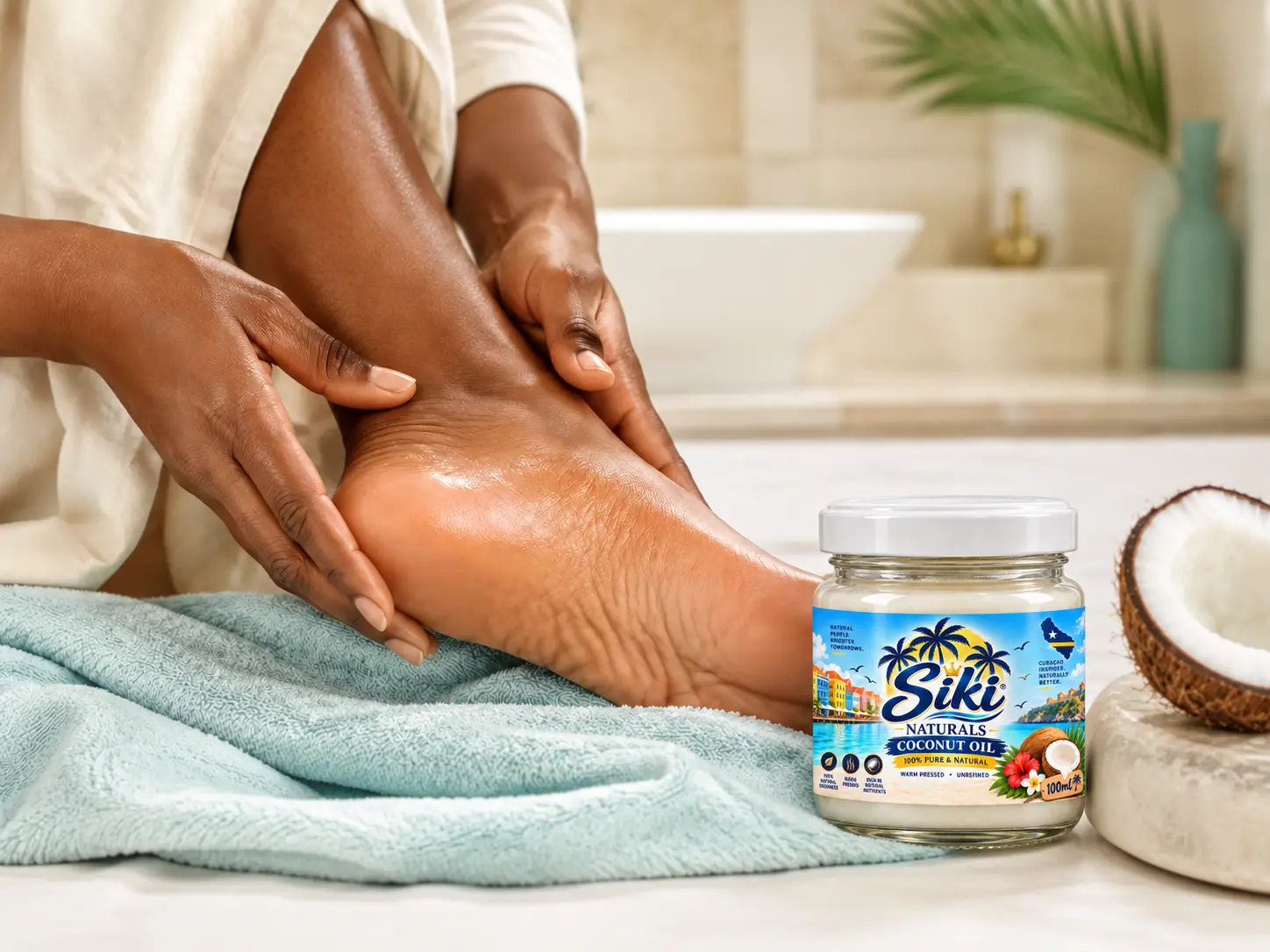
Oil helps seal, not add water
An oil mainly forms a softening layer that slows moisture loss. That is why a small amount often feels most useful after washing, when the skin has been gently dried but is not yet completely parched.
Coconut oil is not a treatment for cracked, infected or persistently inflamed skin. Those concerns need appropriate professional care.
A small-amount evening routine
Wash and dry the area, paying attention between the toes. Warm a pea-sized amount across the palms, then massage it into heels, the sides of the feet, elbows or cuticles.
Wait until the surface no longer feels wet before walking. Cotton socks can protect bedding, but do not use oil on the soles immediately before moving around on smooth floors.
How to avoid a greasy finish
The skin should feel comfortable, not coated. If fingerprints remain oily or socks become saturated, use less next time. One small application is easier to judge than repeatedly adding more.
For hands, focus on knuckles and cuticles and wipe the palms before touching a phone, stairs or door handles.
Listen to the skin
Patch test before the first broader use. Stop if you notice burning, persistent itching or increasing redness. Avoid applying between toes if the area stays damp or is prone to fungal problems.
If dryness is painful, repeatedly splits or does not improve with a basic routine, a pharmacist or doctor can help identify a more suitable approach.