Honey guide
Eucalyptus honey: flavour, crystallisation and storage
What the name says about the floral source, why honey can crystallise and how to protect its aroma at home.
What eucalyptus honey means
Eucalyptus honey is made when bees collect much of their nectar from eucalyptus blossoms. The tree has many species and grows in different regions, so colour and flavour are not identical in every harvest.
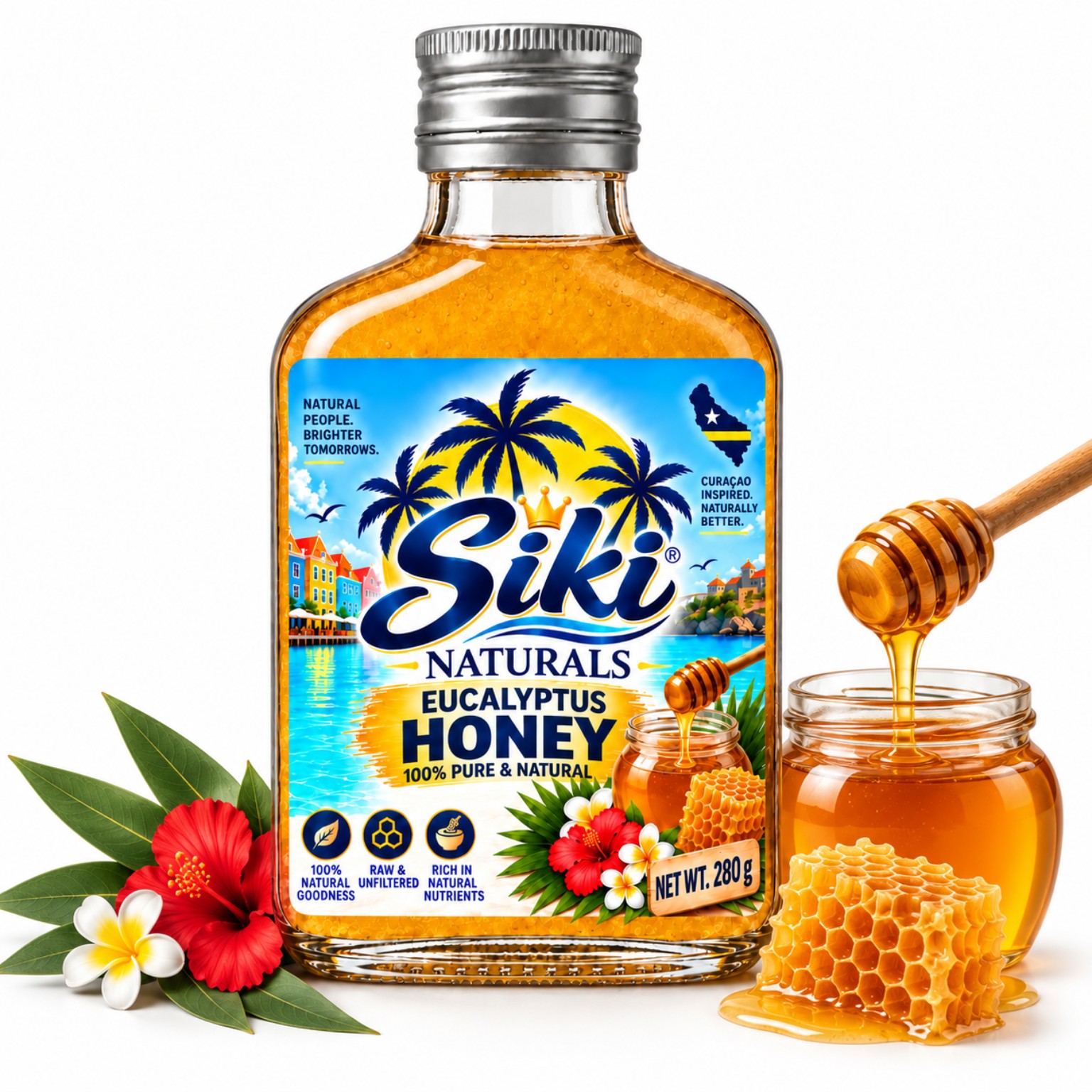
The Siki Naturals honey is described as dark and aromatic, with a fresh-sweet taste, a subtle caramel note and a lightly herbal finish. Those are flavour descriptions, not medicinal claims.
Crystals are a natural change
Honey contains natural sugars, mainly glucose and fructose. Over time, glucose can form crystals, changing clear liquid honey into a creamy or grainy texture. Crystallisation by itself does not mean that honey is spoiled.
The speed varies with the nectar source, temperature and fine particles in the honey. A sealed jar can therefore look different after several weeks while still tasting normal.
How to make crystallised honey fluid
Close the container and place it in comfortably warm water. Stir with a clean, dry spoon once the honey begins to soften. Gentle warming takes longer than high heat but better protects aroma and avoids damaging the container.
Do not add water to the honey. It changes the product and may reduce how well it keeps.
Storage and responsible use
Store honey tightly closed, dry and away from direct sunlight. Use a clean spoon and keep crumbs, tea and moisture out of the bottle. Follow the date and storage information on the label.
Honey is a concentrated sugar food, not a medicine. It should never be given to a child under 12 months, and anyone managing allergies or blood sugar should follow individual professional advice.