
Product care
Why coconut oil turns solid—and how to soften it safely
Solid coconut oil is usually a normal response to room temperature. Learn what is happening and how to warm only what you need.
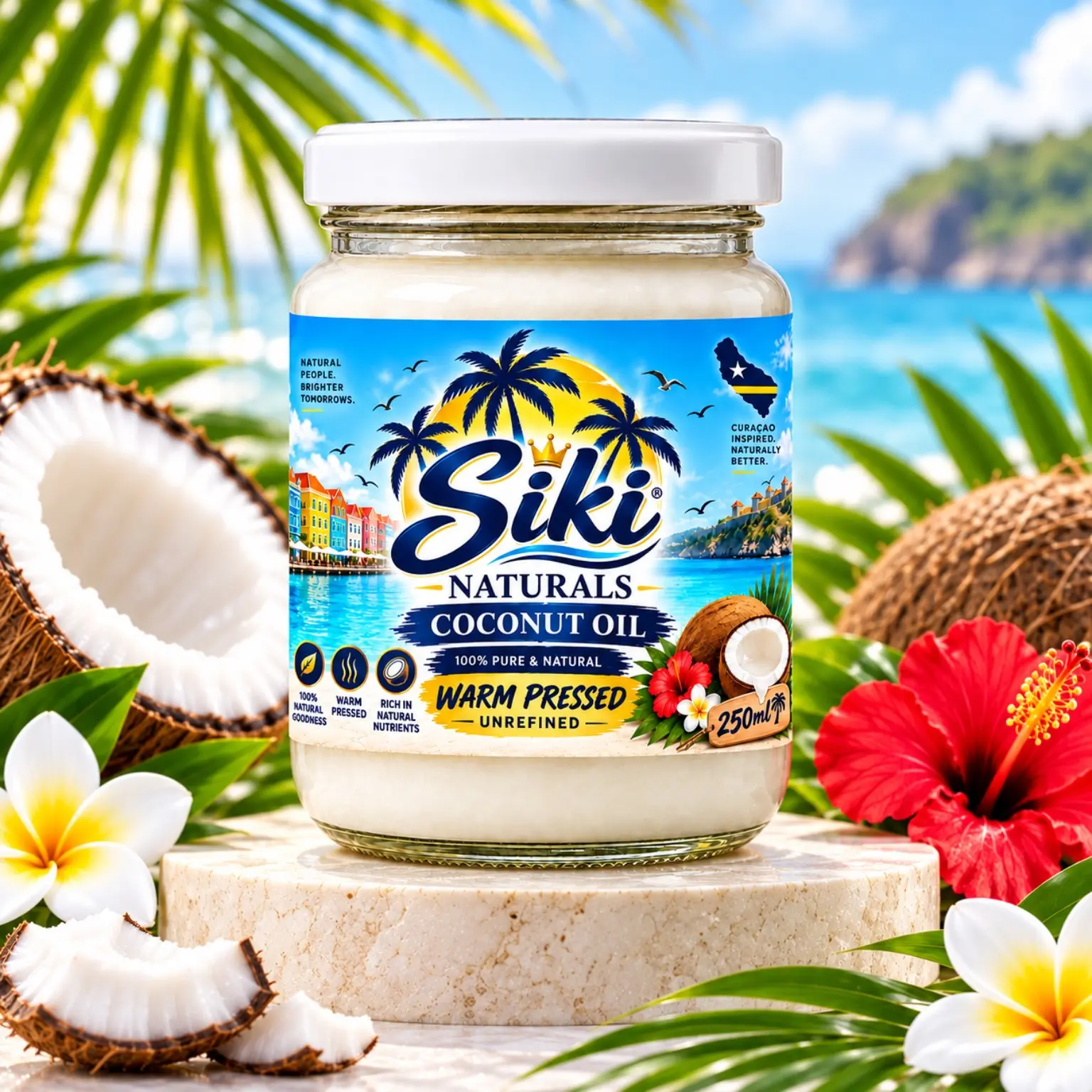
A temperature change, not a defect
Coconut oil contains a mixture of naturally occurring fats that change from liquid to solid across a fairly narrow temperature range. Around a cool Dutch room temperature, the same oil may look clear and pourable one day and white or creamy the next.
Partial melting can also create soft grains or uneven-looking patches. That appearance usually reflects different parts of the oil melting and setting at slightly different moments, not spoilage.
The gentle water-bath method
Close the container firmly. Stand it in a bowl of comfortably warm—not boiling—water for several minutes. Turn or swirl the closed container occasionally so the warmth spreads evenly.
Dry the outside before opening it. This keeps tap water away from the oil. For a glass jar, avoid sudden temperature shocks such as moving it straight from a cold place into very hot water.
Warm only what you need
For hair or body care, fully melting the whole container is rarely necessary. A clean spoon can lift a small solid amount, which quickly softens between warm palms.
Repeated melting and cooling is not automatically harmful, but clean handling and a stable storage place make the product easier to use and reduce the chance of introducing moisture.
When to look more closely
Normal temperature changes do not usually create a sharp, sour or stale smell. If you notice an unfamiliar odour, visible contamination, water in the container or damaged packaging, do not try to fix it by heating.
Set the product aside and send Siki Naturals a clear photo. Include when it was opened and how it was stored so the situation can be assessed properly.